
School for Wellbeing of Art & Craft Practices
What if business models were imagined not just for profit but for the well-being of the communities, crafts, traditions, and ecologies they arise from?
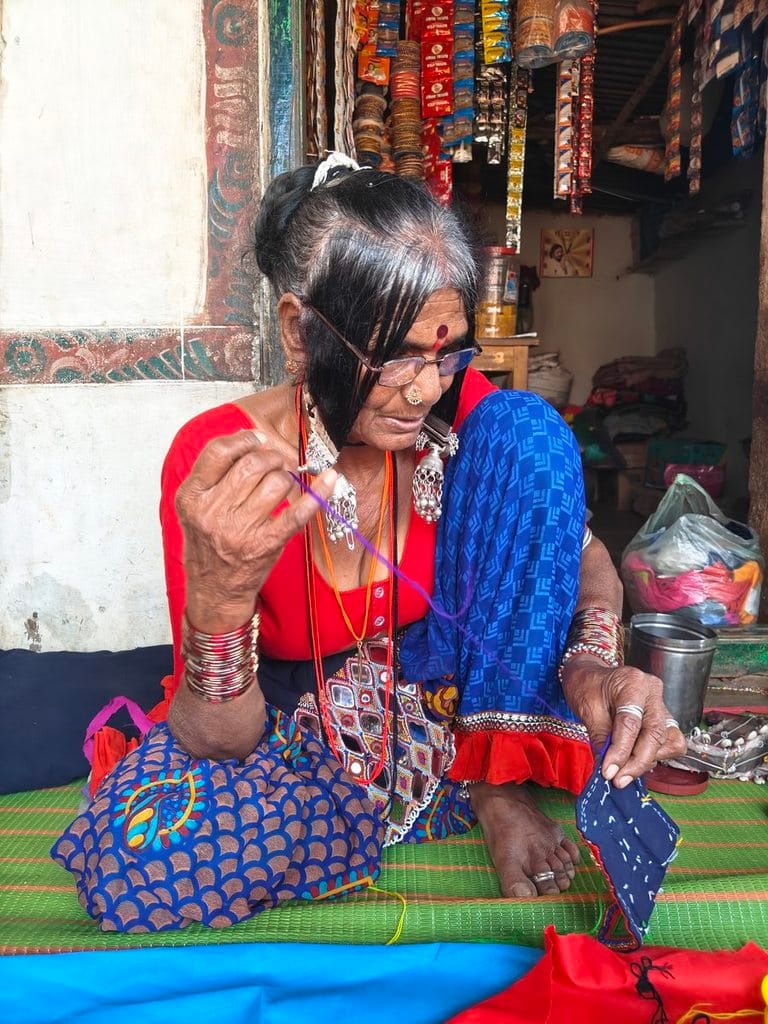
Our school began with the question: What would business models looks like if they were imagined not for profit only, but for the wellbeing of the communities, crafts, traditions, and ecologies they emerge from?
We see craft as an ecosystem of practices, relations, and knowledge that sustains both place and people. Socio-market pressures and demands have deeply affected artisans for the sustenance of their practices. Our work, then, is to co-create creative infrastructures that nurture these practices where enterprises grow in ways that care for crafts, their makers, and also the worlds they hold.
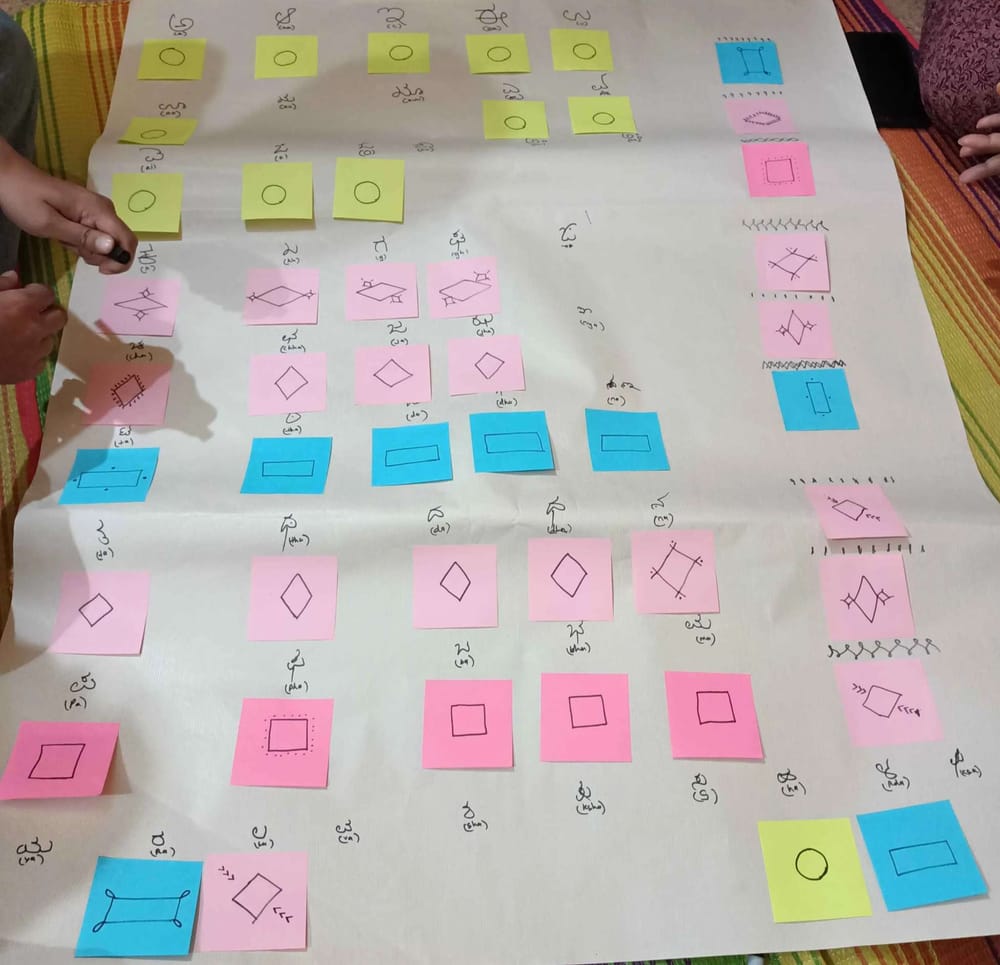
As part of our ongoing long term engagement, Local Techno Futures, we work with Lambani women on Gorboli that doesn't have a written script. Together, we explored how spoken sounds might be represented through embroidery - the heart of Lambani work. To begin, we chose the word Ambika. The circular mirror became the core for the open-mouthed “a.” The rhombus mirror stood in for the closed sounds “m” and “b.” Because this sound was half m and half b, we placed these mirrors closer than the others, while the bar stitch carried the vowel “e.” In this way, sounds, meanings, and stitches came together, weaving language into cloth.